Every once in a while I find something out there that strikes me and I have to share.
I have heard these stories before but always as "Don't tell anyone"stories as someone in these situations is ALWAYS embarrassed. This one I can share it's a doozie.
When DIY wedding flowers are a DIY- Don’t!
by Shannon on February 26, 2010
I have been having some fun by learning to be creative in a different direction- photography. One of my best friends is an amazing wedding photographer and she is mentoring me. The other day I went with her to a wedding to act as her second shooter. As I was done unloading the cameras, she came over to me and whispered, “Don’t tell them you are a florist.” Why? Because there was a major floral disaster happening in the kitchen of the bride’s home and my friend did not want to lose her second shooter if they enlisted me to help fix the problems.
We have all heard about it and in some cases, seen it. The DIY trend come home to roost. In this wedding’s case it was an Aunt that was a retired “florist”. I do not know what her background was, how long she was in the floral business or how long she was out of it, but this lady should have never undertaken the job of wedding day floral designer.
Some of the atrocities committed on this wedding:
Bridal bouquet had gerbera daisies wired down the stem with the wire sticking out of the bottom was snagging her dress. Brown and wilted callas. Phalaenopsis orchids clumsily wired into the bouquet were wilted and dead. Stem of the bridal bouquet was so large it resembled a “trunk”. Ribbon that was supposed to be ivory was yellow.
Bridesmaids bouquets had wire sticking out of the bottom of the stems. The red ribbon used to wrap the bouquets was not color fast and bled red dye all over their hands.
Flower girls’ headbands, had flowers sticking about 7 inches off the tops of their heads. Head band kept flopping off their heads and covering their eyes. The flower girls were given red rose petals to sprinkle down the aisle of the church. The red rose petals were crushed into the beige carpet leaving awful burgundy stains all over the church’s aisle.
Corsages were cymbidium orchids on the stem with a couple of pieces of sword fern just clamped into an elastic wrist-lette. The metal clamp and mechanics were exposed. The orchids broke off (because nothing was holding them in). Boutonnieres were roses with the blunt cut of the rose stem showing wrapped partially in ribbon secured with a pin that painfully stabbed anyone that hugged the guys.
At the reception each table was decorated differently (all 15 of them) with no sense of continuity (ended up looking like a garage sale). Large arrangements right in the guest’s line of sight. The water in vases was murky and cloudy.
Seeing all of this first hand really brought home how it is the little problems that can really add up and use up time on a day that is already short on time and so charged with emotion.
You can buy a book or watch a You Tube video to learn how to arrange flowers. But what about all of the other little things? Things a special event floral designer with years of experience knows how to avoid.
To spite all my advice I can understand why some brides will still go forward thinking they can design their own wedding flowers. Saving money is usually the deciding factor. I often advise budget brides to make their own centerpieces from items that can be put together well in advance of the wedding (Plants or candles are great choices for easy centerpieces) and have a reputable floral designer put together all of the personal flowers.
Are you unswayed or do you agree? Will you be putting together your own wedding flowers?
Friday, February 26, 2010
Wednesday, January 27, 2010
10 Days of Love
10 days of love for $40.00
Our target customer is a man, a man who loves his woman. She is the most important thing in the whole of his world and he always wants to make her feel special. He knows there is no greater feeling than receiving flowers with a heartfelt message attached. If the flowers get sent to her workplace, he knows she is going to be blushing in front of all of her friends and deep down she is going to feel so special. All the other girls are gushing and secretly wishing that their loved ones would show this public affection. The flowers get put somewhere in view of the whole office, everyone who comes into the office asks who they belong to and who they were from, making the whole day extra special.

When she goes home she spends time thinking about where they should go, which room are they going to compliment most? She decides the coffee table in the lounge is the perfect spot with perfect conditions. All week when she has house visitors, she is reminded that her man thinks the world of her...

What else can give you that feeling of complete love and thoughtfulness for at least 10 days?? Got you thinking?
Send her flowers........ the feeling of love will last forever...........

...or at least 10 days...

Your local florist can do all of this with a fresh and scrumptious bouquet.

Carey’s Flowers delivers love to: South Hadley, Amherst, Belchertown, Chicopee, Easthampton, Granby, Hadley, Holyoke, Northampton, Springfield, Southampton, West Springfield, Agawam, Feeding Hills, East Longmeadow, Longmeadow, Ludlow, Westfield,
Tuesday, December 8, 2009
Edible Flowers Part II
So the holidays are around the corner again and I am heading back to one of my favorite topics, eating flowers. As a small child I was fascinated with the idea of eating flowers. It seemed so exotic, fancy and down right cool. It was something only adults got to do and I wanted in on it. So as soon as I could convince an adult to let me try eating flowers I announced, “This is the best thing I ever ate!” I may have been exaggerating at the time but I still enjoy the beauty and ultimate coolness of eating flowers, which is why they show up every year on my holiday table.

Some Background: The culinary use of flowers dates back thousands of years. Many different cultures have used flowers in their traditional foods. The Chinese have been using daylilies, lotus & chrysanthemums for centuries. Italian & Hispanic cultures use stuffed squash blossoms. American colonists made violet vinegar & mutton broth with marigolds. Odysseus encountered the lotus-eating Sybarites on his way home from Troy. Dandelions were one of the bitter herbs referred to in the Old Testament of the Bible.

Flowers can be consumed raw, cooked, or infused in sauce. All edible flowers can be used as a decoration to a dish or on a tray. They add a distinctive color and taste to cakes, pastries & salads. Vinegar changes the color of the flowers, so it is best to serve the salad dressing on the side. Flowers add elegance to beverages when floating in a punch bowl or frozen in ice cubes. Edible flowers can also be used in teas.

Tips for Beginners
Do NOT eat flowers if you have hay fever, asthma or allergies.
Do NOT eat flowers obtained from a florist, nursery or garden center. Do NOT eat flowers growing on the side of the road
With the widespread use of pesticides by commercial growers, purchase edible flowers from a supplier who grows them specifically for consumption. Due to their popularity, many grocery stores & gourmet markets now sell edible flowers. It is most ideal to grow them yourself, so you know they are completely pesticide-free.
If you decide to grow your own flowers to eat, be certain you know your flowers since not all are edible. Some are poisonous.
Pick flowers on the day you are planning to use them. It is best to pick them in the morning or late afternoon when the water content is high.
Select flowers that are freshly opened avoid flowers that are not fully open (unless buds are desired) or those starting to wilt. Select flowers free of diseased spots or insect damage. Normally, the petals are the only parts to be eaten.

To maintain maximum freshness, keep flowers cool after harvest. Store your flowers, whole, in a container of water and place them in the refrigerator until you need to use them. Blooms and short-stemmed flowers can be kept fresh by laying them between layers of dampened paper-towel
Before use, wash flowers thoroughly in salt water. Perk them up by dropping them into a bowl of ice water for 30-60 seconds; then drain on paper towels. Remove all the green parts, stems and leaves, and any white 'heels' on petals since these parts can often be bitter
Petals can be stored for a day in a plastic bag in the refrigerator - but, ideally, you should use them within a few hours.
Introduce flowers into your diet one at a time in small quantities
How to Crystallize Flowers to Decorate Cakes & Candies: Combine one extra-large egg white (at room temperature) with a few drops of water and beat lightly until the white shows a few bubbles. Using a small paintbrush, paint a thin layer of egg white onto both sides of a clean, dry petal. Gently place the petal into a shallow bowl of superfine sugar to coat the bottom of the petal; sprinkle sugar on top to cover the top of the petal. Gently shake off any excess sugar. Lay the petal on waxed paper to dry. Let the flowers dry completely; they should be free of any moisture. This could take 8 to 36 hours.

A Partial Listing of Edible Flowers:
Anise Hyssop
Apple Bee Balm tea
Bergamot
Borage
Calendula
Chive
Chrysanthemum
Cornflower
Day Lily
Dianthus
English Daisy
Fuschia
Hollyhock
Johnny Jump-Ups
Lavender
Lilac
Mint
Nasturtium
Pansy
Peach
Plum
Prickly Pear
Rose
Rosemary
Sage
Signet Marigold
Squash Blossom
Violet
Yucca

Some Background: The culinary use of flowers dates back thousands of years. Many different cultures have used flowers in their traditional foods. The Chinese have been using daylilies, lotus & chrysanthemums for centuries. Italian & Hispanic cultures use stuffed squash blossoms. American colonists made violet vinegar & mutton broth with marigolds. Odysseus encountered the lotus-eating Sybarites on his way home from Troy. Dandelions were one of the bitter herbs referred to in the Old Testament of the Bible.

Flowers can be consumed raw, cooked, or infused in sauce. All edible flowers can be used as a decoration to a dish or on a tray. They add a distinctive color and taste to cakes, pastries & salads. Vinegar changes the color of the flowers, so it is best to serve the salad dressing on the side. Flowers add elegance to beverages when floating in a punch bowl or frozen in ice cubes. Edible flowers can also be used in teas.

Tips for Beginners
Do NOT eat flowers if you have hay fever, asthma or allergies.
Do NOT eat flowers obtained from a florist, nursery or garden center. Do NOT eat flowers growing on the side of the road
With the widespread use of pesticides by commercial growers, purchase edible flowers from a supplier who grows them specifically for consumption. Due to their popularity, many grocery stores & gourmet markets now sell edible flowers. It is most ideal to grow them yourself, so you know they are completely pesticide-free.
If you decide to grow your own flowers to eat, be certain you know your flowers since not all are edible. Some are poisonous.
Pick flowers on the day you are planning to use them. It is best to pick them in the morning or late afternoon when the water content is high.
Select flowers that are freshly opened avoid flowers that are not fully open (unless buds are desired) or those starting to wilt. Select flowers free of diseased spots or insect damage. Normally, the petals are the only parts to be eaten.

To maintain maximum freshness, keep flowers cool after harvest. Store your flowers, whole, in a container of water and place them in the refrigerator until you need to use them. Blooms and short-stemmed flowers can be kept fresh by laying them between layers of dampened paper-towel
Before use, wash flowers thoroughly in salt water. Perk them up by dropping them into a bowl of ice water for 30-60 seconds; then drain on paper towels. Remove all the green parts, stems and leaves, and any white 'heels' on petals since these parts can often be bitter
Petals can be stored for a day in a plastic bag in the refrigerator - but, ideally, you should use them within a few hours.
Introduce flowers into your diet one at a time in small quantities
How to Crystallize Flowers to Decorate Cakes & Candies: Combine one extra-large egg white (at room temperature) with a few drops of water and beat lightly until the white shows a few bubbles. Using a small paintbrush, paint a thin layer of egg white onto both sides of a clean, dry petal. Gently place the petal into a shallow bowl of superfine sugar to coat the bottom of the petal; sprinkle sugar on top to cover the top of the petal. Gently shake off any excess sugar. Lay the petal on waxed paper to dry. Let the flowers dry completely; they should be free of any moisture. This could take 8 to 36 hours.

A Partial Listing of Edible Flowers:
Anise Hyssop
Apple Bee Balm tea
Bergamot
Borage
Calendula
Chive
Chrysanthemum
Cornflower
Day Lily
Dianthus
English Daisy
Fuschia
Hollyhock
Johnny Jump-Ups
Lavender
Lilac
Mint
Nasturtium
Pansy
Peach
Plum
Prickly Pear
Rose
Rosemary
Sage
Signet Marigold
Squash Blossom
Violet
Yucca
Saturday, November 28, 2009
Hippeastrums are big fat...
Hippeastrums are the big, fat, trumpet-shaped flowers that most of us (wrongly) still call Amaryllis. If you walk into our store we call them Amaryllis! Don’t worry were all on the same wrong page with beautiful superfluous flowers.

As crocus, daffs and tulips disappear from the shelves of our shop, these huge, beefy bulbs take their place. In flower, they look as though they've wandered off the set of Walt Disney's Fantasia. You can scarcely believe that any flower can be so vast, so stiff, so voluptuously unreal.
Once you get them started, they grow indoors at a phenomenal rate. You can buy them as extra presents for children, but pot them up and get them going before handing them over. From then on, there is enough action to engage children.
There was a time when hippeastrums, like potatoes, only came in two colors: white and a pleasingly shocking shade of red. The red was usually 'Red Lion' and the white 'Apple Blossom', which was actually a very pale pink. But partly because hippeastrums have recently become such popular cut flowers, there's been a very welcome explosion in the number of varieties available at this time of year. You can see why professional florists like hippeastrums so much. They last a long time in water and you don't need many of them to make a dramatic display.
You can experiment by planting the bulbs themselves in tall, thick glass vases. You need to be careful about watering, as there will no holes at the bottom like you would have in a pot, but the final effect is wonderful, very spare and spacey. Add slender twigs of beech, twisty willow or branches if you want a fuller effect. You can stick the twigs straight in the compost that is already there.

Big is not always best, but with hippeastrums, it pays to get top-size bulbs. Kits, containing pot (usually hideous), compost and bulb are not such good value as buying bulbs on their own. Check that each bulb is firm, that its nose is not damaged and that it has plenty of fleshy roots. Soak the roots for 12-24 hours, by balancing the bulb on top of a jar of tepid tap water. Do not get the base itself wet, or it may rot.
Choose 6” pots for smallish bulbs, 7” pots for medium-sized bulbs and 8” pots for big the biggest ones . You do not need to leave much space between the edge of the bulb and the edge of the pot, but the deeper the pot the better. Plastic is easier to manage than terracotta (though does not look as good). The pots must, of course have drainage holes.
The compost you use must be nutritious and free-draining. I have had decent results simply by mixing multipurpose compost with gravel or sand (two parts compost to one part gravel/sand). Add a slow-release fertiliser (such as Osmacote granules) to the mix.
Put a layer of your compost in the bottom of a pot. Hold the bulb in one hand with its roots hanging down and firm more compost round the roots. The nose of the bulb should poke up above the rim of the pot and its shoulders should be above the surface of the compost. Water with tepid water and put the pot in a warm, light, well-ventilated place, free from draftes . A temperature around 70 degrees is ideal.

Let the compost dry out on top before watering. Always water from the top, never from the bottom. Do not wet the nose of the bulb or allow the pot to stand in water for a long period. When the first shoot appears, start feeding by adding a liquid fertiliser when you water. Give the pot a quarter turn each day to keep the stems growing straight. You may need to stake them as they grow. When the buds start to open, move the pot to a cooler place so the flowers last as long as possible. Suppliers suggest that hippeastrums will come into flower six to eight weeks after planting. They have never been that fast for me. ten weeks plus is more realistic maybe it’s a New England thing
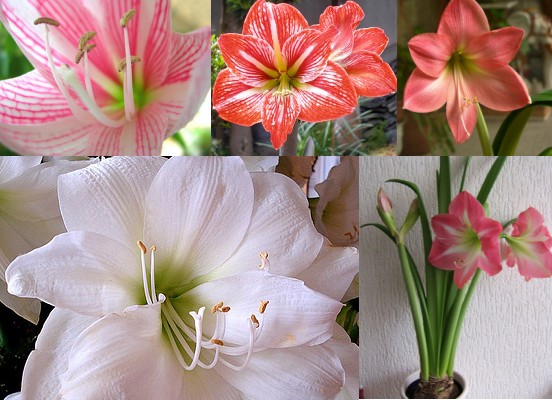
As crocus, daffs and tulips disappear from the shelves of our shop, these huge, beefy bulbs take their place. In flower, they look as though they've wandered off the set of Walt Disney's Fantasia. You can scarcely believe that any flower can be so vast, so stiff, so voluptuously unreal.
Once you get them started, they grow indoors at a phenomenal rate. You can buy them as extra presents for children, but pot them up and get them going before handing them over. From then on, there is enough action to engage children.
There was a time when hippeastrums, like potatoes, only came in two colors: white and a pleasingly shocking shade of red. The red was usually 'Red Lion' and the white 'Apple Blossom', which was actually a very pale pink. But partly because hippeastrums have recently become such popular cut flowers, there's been a very welcome explosion in the number of varieties available at this time of year. You can see why professional florists like hippeastrums so much. They last a long time in water and you don't need many of them to make a dramatic display.
You can experiment by planting the bulbs themselves in tall, thick glass vases. You need to be careful about watering, as there will no holes at the bottom like you would have in a pot, but the final effect is wonderful, very spare and spacey. Add slender twigs of beech, twisty willow or branches if you want a fuller effect. You can stick the twigs straight in the compost that is already there.

Big is not always best, but with hippeastrums, it pays to get top-size bulbs. Kits, containing pot (usually hideous), compost and bulb are not such good value as buying bulbs on their own. Check that each bulb is firm, that its nose is not damaged and that it has plenty of fleshy roots. Soak the roots for 12-24 hours, by balancing the bulb on top of a jar of tepid tap water. Do not get the base itself wet, or it may rot.
Choose 6” pots for smallish bulbs, 7” pots for medium-sized bulbs and 8” pots for big the biggest ones . You do not need to leave much space between the edge of the bulb and the edge of the pot, but the deeper the pot the better. Plastic is easier to manage than terracotta (though does not look as good). The pots must, of course have drainage holes.
The compost you use must be nutritious and free-draining. I have had decent results simply by mixing multipurpose compost with gravel or sand (two parts compost to one part gravel/sand). Add a slow-release fertiliser (such as Osmacote granules) to the mix.
Put a layer of your compost in the bottom of a pot. Hold the bulb in one hand with its roots hanging down and firm more compost round the roots. The nose of the bulb should poke up above the rim of the pot and its shoulders should be above the surface of the compost. Water with tepid water and put the pot in a warm, light, well-ventilated place, free from draftes . A temperature around 70 degrees is ideal.

Let the compost dry out on top before watering. Always water from the top, never from the bottom. Do not wet the nose of the bulb or allow the pot to stand in water for a long period. When the first shoot appears, start feeding by adding a liquid fertiliser when you water. Give the pot a quarter turn each day to keep the stems growing straight. You may need to stake them as they grow. When the buds start to open, move the pot to a cooler place so the flowers last as long as possible. Suppliers suggest that hippeastrums will come into flower six to eight weeks after planting. They have never been that fast for me. ten weeks plus is more realistic maybe it’s a New England thing
Monday, November 16, 2009
Cut Flower Tips
We at Carey’s Flowers hope that you will always enjoy your flower purchases. You have spent your hard earned money on something of beauty and you will want the flowers to last as long as possible. Your flowers will need your help if they are going to give you their all. Here are some tips for you to help them out.
Flower Arrangements
Many arrangements are sent out in boxes, remove this box as soon as the flowers have reached their final destination.
We advise placing all arrangements on a small tablemat of some sort and not directly on any polished surface.
If your flowers have been arranged in florists foam it is harder to see that the water level may be low. For this reason watering every day is best. Water slowly through the center of the arrangement while inserting the index finger of your free hand down inside of the arrangement to feel the water level, this will help avoid spills.
If your flowers arrive in a vase be careful vases can ‘sweat’ and leave a small puddle on surfaces. Changes in temperature cause vases to sweat, here in New England changes in temperature from indoor to outdoor can be drastic and happen year round. With a glass vase it is easier to see when water levels go down but it has been my experience that people just let the water sit and run out. This severely shortens the life of your flowers I hope you don’t buy a new car and let the gas run out. So watering each day with fresh clean water (from the tap is fine) is the very best thing you can do for your flowers. The water should never dip down below the neck of the vase.
Cut Flowers
Carefully remove all wrapping materials the flowers have come in.
Clean your vase thoroughly using hot water and soap the best practice is to then rinse with water that you have put a tablespoon of bleach into. The bleach kills any bacteria on the inside of the vase and flowers live longer in a bacteria free environment. Then fill the vase ¾ of the way with cool water that has been mixed with the flower food sachet you received with your flowers.
Carefully remove any leaves from the stems that may be below the water line of your vase; these leaves will decompose and contaminate the water and can shorten the life of your flowers. This decomposition also causes what I like to call ‘water funk’ this is when your flowers look fine but there is a funny smell about them. That’s the leaves decomposing and the water getting stale. Why would you want beautiful flowers that stink yuk.
Holding the bouquet up to the vase will help you determine the length you will need to cut the stems to. With a clean knife (cleaned with bleach) cut stems at a 45-degree angle. Place immediately into water in vase.
Once the bouquet has been placed into the vase check that is sits in proportion to the vase. The flowers should not tower over the vase this is the perfect recipe for the vase to tip over and then you have a big mess and no pretty flowers.
When the flowers are in correct proportion fill the vase the rest of the way with your water / flower food mix.
Choosing the right place in your home for your flowers is key. Many people have said to me “I like them on top of the TV so I can see them all the time” BAD choice! The television gives off too much heat for cut flowers. Place flowers in a cool place, away from heating or cooling vents, appliances, direct sunlight (picture window are a no no) or drafts.
Keep cut flowers away form ripening fruit. As fruit ripens it gives off ethylene gas with causes flowers to rot and die quickly.
Add water daily. Add water daily. Add water daily.
General Cautions
Lily pollen can stain. In case of contact dab affected area with tape wrapped sticky side out around your hand, DO NOT rub! Do NOT use water! Follow up with a stain removing pre-treatment before washing any cloth items.
All berries can stain and may NOT be eaten.
Wash your hands thoroughly after arranging your flowers, some flowers have sap which can irritate sensitive skin.
www.careysflower.com
Flower Arrangements
Many arrangements are sent out in boxes, remove this box as soon as the flowers have reached their final destination.
We advise placing all arrangements on a small tablemat of some sort and not directly on any polished surface.
If your flowers have been arranged in florists foam it is harder to see that the water level may be low. For this reason watering every day is best. Water slowly through the center of the arrangement while inserting the index finger of your free hand down inside of the arrangement to feel the water level, this will help avoid spills.
If your flowers arrive in a vase be careful vases can ‘sweat’ and leave a small puddle on surfaces. Changes in temperature cause vases to sweat, here in New England changes in temperature from indoor to outdoor can be drastic and happen year round. With a glass vase it is easier to see when water levels go down but it has been my experience that people just let the water sit and run out. This severely shortens the life of your flowers I hope you don’t buy a new car and let the gas run out. So watering each day with fresh clean water (from the tap is fine) is the very best thing you can do for your flowers. The water should never dip down below the neck of the vase.
Cut Flowers
Carefully remove all wrapping materials the flowers have come in.
Clean your vase thoroughly using hot water and soap the best practice is to then rinse with water that you have put a tablespoon of bleach into. The bleach kills any bacteria on the inside of the vase and flowers live longer in a bacteria free environment. Then fill the vase ¾ of the way with cool water that has been mixed with the flower food sachet you received with your flowers.
Carefully remove any leaves from the stems that may be below the water line of your vase; these leaves will decompose and contaminate the water and can shorten the life of your flowers. This decomposition also causes what I like to call ‘water funk’ this is when your flowers look fine but there is a funny smell about them. That’s the leaves decomposing and the water getting stale. Why would you want beautiful flowers that stink yuk.
Holding the bouquet up to the vase will help you determine the length you will need to cut the stems to. With a clean knife (cleaned with bleach) cut stems at a 45-degree angle. Place immediately into water in vase.
Once the bouquet has been placed into the vase check that is sits in proportion to the vase. The flowers should not tower over the vase this is the perfect recipe for the vase to tip over and then you have a big mess and no pretty flowers.
When the flowers are in correct proportion fill the vase the rest of the way with your water / flower food mix.
Choosing the right place in your home for your flowers is key. Many people have said to me “I like them on top of the TV so I can see them all the time” BAD choice! The television gives off too much heat for cut flowers. Place flowers in a cool place, away from heating or cooling vents, appliances, direct sunlight (picture window are a no no) or drafts.
Keep cut flowers away form ripening fruit. As fruit ripens it gives off ethylene gas with causes flowers to rot and die quickly.
Add water daily. Add water daily. Add water daily.
General Cautions
Lily pollen can stain. In case of contact dab affected area with tape wrapped sticky side out around your hand, DO NOT rub! Do NOT use water! Follow up with a stain removing pre-treatment before washing any cloth items.
All berries can stain and may NOT be eaten.
Wash your hands thoroughly after arranging your flowers, some flowers have sap which can irritate sensitive skin.
www.careysflower.com

Saturday, October 17, 2009
Flowers should not apologize
I was going to post another wedding themed item today, but I just read this great article bt John DeVore and I could not resist sharing it.
Flowers should not apologize; they should symbolize some wonderful thoughts about the woman.
I'd like to address the men reading this (all five of you): buy the broads flowers. Trust me. And now to all the women reading, who outnumber us dudes 100 to 1: allow the dorks in your life to buy you flowers. Trust me.
Flowers are not a romantic punchline, nor are they a symbol of patriarchal dominance. Buying daisies or lilies or chrysanthemums for the woman you love is one of those things a man just regularly does. This is a lesson my old man taught me.
Maybe it hearkens back to a time when men were gorillas in gray suits and women were trophies soaking their hands in bowls of Palmolive liquid soap -- a time when flowers were employed to mend broken promises, to make up for forgotten dinner dates, or to apologize for lipstick-stained shirt collars.
Those days are in the past, of course. Flowers do not resolve conflicts, nor do they anesthetize. Now that I think about it, they never did. But my dad had a different reasoning for surprise roses. He was always buying my mom flowers, chocolates, and trinkets. Her absentminded whispers while leafing through a catalog would be heard and little surprise gifts would appear at the doorstep.
Most of what I know about women I learned from how my dad treated my mother. I'd be a better man if I followed his example more fastidiously, but I haven't, and that's partially why I've spent so many years driving relationships off of cliffs. But some lessons stick out.
Theirs was a love affair that lasted four decades. He would sing to her in public, and she'd blush and beg for him to stop. They never seemed to tire of each others' gentle words. And 45 minutes after he died, on my mother's birthday, FedEx walked into the ICU with her present -- a fancy brand-name bag that escapes me, but that I'm pretty sure is sold in piles on the streets of New York.
While my mother was in a street fight with doctors (and a dependably cruel universe) for every dwindling minute of my dad's life, he had been sitting up in his hospital bed, buying her something he knew she'd love.
My dad knew that buying a gift for that person who'll laugh at your terrible jokes, kiss you with lips and breath, and hold your hand as a needle searches for your vein is just a way of saying "I'm thinking about you when you're not here."
And that's what flowers are, just a simple, easy way of letting someone know they were in your thoughts. That's it. It's not complicated. Flowers announce: out of sight, still in my mind and heart. It is unerringly human to want to know that someone is thinking about you when you are not around.
I think women, especially, worry that all men have short attention spans and for the most part -- Oh hey! When did I buy this can of beans? -- it's not an unfounded anxiety. I know I've forgotten things like birthdays (spring?), anniversaries (Tuesday?) and eye color (mostly white?).
But if a man is in love, he carries that love under his skin like a nerve. Such is the magnificence of man, however, that we're solidly confidant that your every third thought is about us. Right? Right? Oh, sarcasm! Women are the more conscientious gender; men are the more eat-with-our-fingers gender. I think that is fair
I recently bought flowers for a lady I'm a' courting. We were set to meet at the soda jerk for a malt before skipping over for a double-feature monster movie at the picture palace. I had been thinking of her all day, anticipating the date. She's out of my league and that's how it should be. It's never too late to relearn passed-down life lessons. I was nervous, and couldn't shake her freaking beautiful face out from behind my eyelids.

So I did what my dad would have done. What a man does. I stormed into a florist's shop, picked out a bunch of suitably fragrant flowers, paid for them, and marched right back outside. A man with a bouquet of flowers is a real man.
I carried them the way you'd carry a rifle at a firing range with the barrel pointed down. I received multiple dude nods from men I walked past. They were acknowledging that I was on my way to woo a woman, which is our primary programming. I even received an approving nod from a pair of lesbians who also knew I was doing my duty.
I mean, it was just a date. And the vegetation cost me all of ten bucks. The plants would be dead within a week anyway. But at least she would know that for that day, her name barely escaped my lips.
Men should buy women flowers. 

Men should buy women flowers. They are colorful. They smell nice. And without them, flora would never get laid. To many, purchasing flowers is cliché or corny or tacky. And to others, it's an outdated ritual in our modern era of gender equality.
Flowers should not apologize; they should symbolize some wonderful thoughts about the woman.
I'd like to address the men reading this (all five of you): buy the broads flowers. Trust me. And now to all the women reading, who outnumber us dudes 100 to 1: allow the dorks in your life to buy you flowers. Trust me.
Flowers are not a romantic punchline, nor are they a symbol of patriarchal dominance. Buying daisies or lilies or chrysanthemums for the woman you love is one of those things a man just regularly does. This is a lesson my old man taught me.
Maybe it hearkens back to a time when men were gorillas in gray suits and women were trophies soaking their hands in bowls of Palmolive liquid soap -- a time when flowers were employed to mend broken promises, to make up for forgotten dinner dates, or to apologize for lipstick-stained shirt collars.
Those days are in the past, of course. Flowers do not resolve conflicts, nor do they anesthetize. Now that I think about it, they never did. But my dad had a different reasoning for surprise roses. He was always buying my mom flowers, chocolates, and trinkets. Her absentminded whispers while leafing through a catalog would be heard and little surprise gifts would appear at the doorstep.
Most of what I know about women I learned from how my dad treated my mother. I'd be a better man if I followed his example more fastidiously, but I haven't, and that's partially why I've spent so many years driving relationships off of cliffs. But some lessons stick out.
Theirs was a love affair that lasted four decades. He would sing to her in public, and she'd blush and beg for him to stop. They never seemed to tire of each others' gentle words. And 45 minutes after he died, on my mother's birthday, FedEx walked into the ICU with her present -- a fancy brand-name bag that escapes me, but that I'm pretty sure is sold in piles on the streets of New York.
While my mother was in a street fight with doctors (and a dependably cruel universe) for every dwindling minute of my dad's life, he had been sitting up in his hospital bed, buying her something he knew she'd love.
My dad knew that buying a gift for that person who'll laugh at your terrible jokes, kiss you with lips and breath, and hold your hand as a needle searches for your vein is just a way of saying "I'm thinking about you when you're not here."
And that's what flowers are, just a simple, easy way of letting someone know they were in your thoughts. That's it. It's not complicated. Flowers announce: out of sight, still in my mind and heart. It is unerringly human to want to know that someone is thinking about you when you are not around.
I think women, especially, worry that all men have short attention spans and for the most part -- Oh hey! When did I buy this can of beans? -- it's not an unfounded anxiety. I know I've forgotten things like birthdays (spring?), anniversaries (Tuesday?) and eye color (mostly white?).
But if a man is in love, he carries that love under his skin like a nerve. Such is the magnificence of man, however, that we're solidly confidant that your every third thought is about us. Right? Right? Oh, sarcasm! Women are the more conscientious gender; men are the more eat-with-our-fingers gender. I think that is fair
I recently bought flowers for a lady I'm a' courting. We were set to meet at the soda jerk for a malt before skipping over for a double-feature monster movie at the picture palace. I had been thinking of her all day, anticipating the date. She's out of my league and that's how it should be. It's never too late to relearn passed-down life lessons. I was nervous, and couldn't shake her freaking beautiful face out from behind my eyelids.

So I did what my dad would have done. What a man does. I stormed into a florist's shop, picked out a bunch of suitably fragrant flowers, paid for them, and marched right back outside. A man with a bouquet of flowers is a real man.
I carried them the way you'd carry a rifle at a firing range with the barrel pointed down. I received multiple dude nods from men I walked past. They were acknowledging that I was on my way to woo a woman, which is our primary programming. I even received an approving nod from a pair of lesbians who also knew I was doing my duty.
I mean, it was just a date. And the vegetation cost me all of ten bucks. The plants would be dead within a week anyway. But at least she would know that for that day, her name barely escaped my lips.
Wednesday, September 2, 2009
Wedding Terms
Flowers have a starring role at weddings. A bride traditionally carries a bouquet, and other members of the wedding party may also carry or wear flowers. Before you place your flower order, review your options and understand the differences in floral varieties. Here are some key terms you should know from A to W:
Arm or Crescent: Flowers are nestled over the arm.
Arm or Crescent: Flowers are nestled over the arm.
Assembled in Foam: Flowers are held in florist’s foam that is placed in a plastic holder. This form of construction is less labor intensive than wiring.
Ballerina: A round bouquet made up of a few flowers arranged with tulle or netting. This bouquet was popular in the early 1940s when the war made flowers scarce.
Biedermeier: A tight, rounded bouquet made up of concentric circles of blossoms. Using different flowers for each circle can give a striped effect.
Boutonniere: Flowers worn on the lapel by the groom and the male members of the family. These are currently also popular for women of honor.
Cascade: A bouquet anchored in a hand-held base. Flowers and greenery hang or “cascade” down the front. These are charging back into style again and I say Whoopee!!
Colonial: Large bouquet of the same shape as a nosegay.
Composite: Individual petals and leaves are wired and put together to create the appearance of a single giant blossom. Given the labor involved, this method results in a rather expensive bouquet, but stunning for the bride daring enough to truly be different.
Corsages: Flowers usually worn by the mothers of the bride, as well as grandmothers, Godmothers, married sisters as well as favored relatives. They can either be pinned to the dress or worn on the wrist. They should not be so large so as to actually cover a great part of the outfit or of a color that would clash with it. Although I would say get ready for the future because today’s teenager likes to purchase huge corsages for proms, so I see this bigger version of a corsage moving to wedding of the future, and again I say Whoopee!! I just love to stir things up.
Hand-Tied: The stems of the flowers are tied together with ribbon or tulle. This style was the focus at the wedding of Caroline Kennedy daughter of Jacqueline and John Kennedy.
Mono-botanical: all one type of flower.
Nosegay: A round, densely packed cluster of blooms, all cut to the same length and then tightly wrapped with ribbon or in a hand-held base.
Pomander: The flowers form a small ball, often carried by a loop of ribbon. Flower girls often carry this bouquet. A word of caution, this looks like it could be a lot of fun to throw to most young children. With a feisty youngster these can look quite mangled in pictures.
Posy: Small-scale nosegay made up of buds.
Presentation or Pageant: a bunch of long-stemmed flowers cradled in the bride’s arms. Think Miss America Style.
Single Stem: one long-stemmed flower, which may have ribbons around the stem is carried, a good complement to a minimalist style gown, or a very tight budget.
Spray: flowers gathered in a triangular-shaped cluster.
Teardrop: a variation on the cascade bouquet; it is rounded on top and comes to a point at the bottom.
Tussy-mussy: a Victorian style of nosegay carried in a silver cone holder.

Wired: The top part of the flower is removed from most of its stem. Wire is threaded through the top of its stem, allowing the flower to be twisted and turned to form the bouquet’s shape
Wristlet: This small flower bouquet worn on the wrist. The bracelet part of this item is now a very stylized item. Again the younger crowd is really changing the look of these going forward.
Subscribe to:
Posts (Atom)
